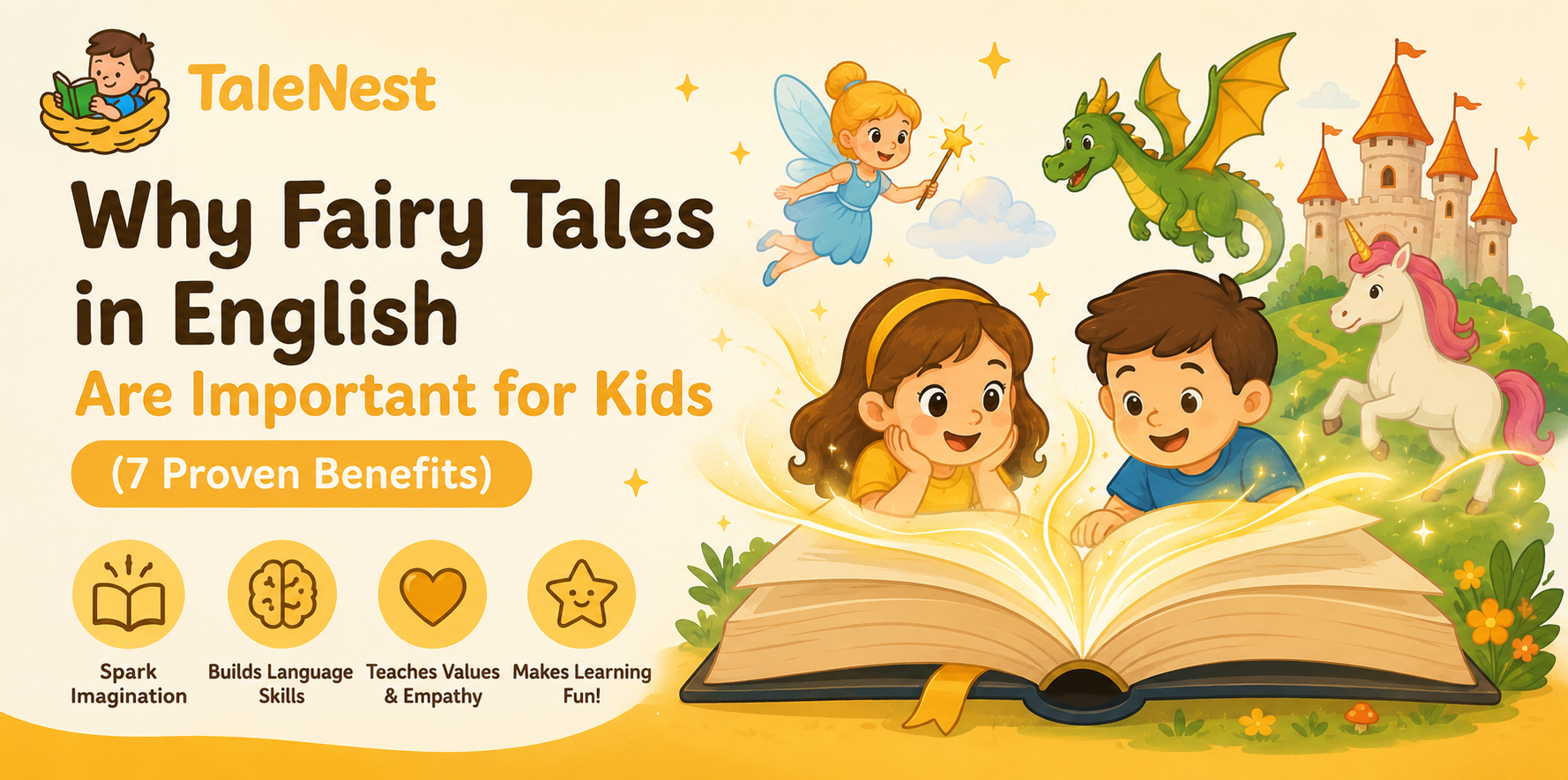
Children love stories. A good story can make them laugh, think, and learn something valuable. That is why Fairy Tales in English have remained popular for generations. They are not only fun to watch and listen to, but they also help children develop important life skills.
According to reading and literacy studies, children who are regularly exposed to storytelling develop stronger language skills and better reading habits than those who rarely listen to stories. Storytelling also helps improve memory, focus, and emotional understanding.
At TaleNest, we believe children learn best when education feels like entertainment. Our collection of Fairy Tales in English combines magical adventures with meaningful lessons that children can apply in everyday life.
If you want your child to enjoy positive screen time, TaleNest offers stories that are both entertaining and educational.
Featured TaleNest Stories
- The Monkey Broke the Magic Glasses
- Honest Woodcutter and the Magical Axe
- Tilly the Tall Giraffe and the Secret of the Forest
- The Delicious Thorn Biryani Feast
Subscribe to the TaleNest YouTube Channel for new stories every week.
Why Are Fairy Tales Important for Kids?
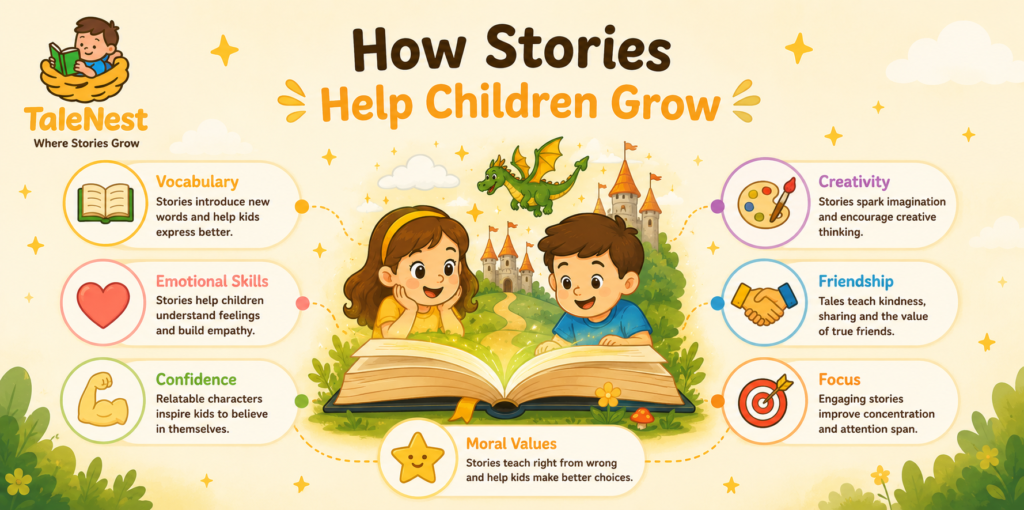
Fairy Tales in English help children improve vocabulary, listening skills, creativity, confidence, emotional intelligence, and moral understanding. They present important life lessons through memorable characters and exciting adventures, making learning both enjoyable and effective.
Benefit #1: Fairy Tales Improve English Vocabulary Naturally
How Children Learn New Words Through Stories
Children learn language best when they hear words used in meaningful situations. Stories provide a natural way to introduce new words without making learning feel difficult.
Repetition Helps Language Development
Many words and phrases appear repeatedly in stories. Hearing these words again and again helps children remember them more easily.
Context Makes New Words Easier to Understand
Instead of memorizing definitions, children understand words through actions, conversations, and situations in the story.
TaleNest Example: Tilly the Tall Giraffe and the Secret of the Forest
This story introduces children to words related to nature, friendship, courage, and teamwork. As children follow Tilly’s adventure, they naturally understand and remember these words.
Regular exposure to Fairy Tales in English can significantly improve a child’s vocabulary over time.
Benefit #2: Fairy Tales Teach Important Moral Values
Why Stories Are More Effective Than Lectures
Children often learn better through examples than direct instructions. Stories show the consequences of good and bad choices in a way that children understand.
Children Remember Lessons Through Characters
When children connect with characters, they remember the lessons those characters learn.
Learning Right and Wrong Through Storytelling
Stories help children understand concepts such as honesty, kindness, responsibility, and respect.
TaleNest Example: Honest Woodcutter and the Magical Axe
The woodcutter chooses honesty even when tempted by valuable rewards. His truthful behavior teaches children that honesty is more important than personal gain.
Moral Learned
- Honesty
- Integrity
- Trustworthiness
Many educators believe that storytelling is one of the most effective ways to teach values because children emotionally connect with the message.
Benefit #3: Fairy Tales Boost Creativity and Imagination
The Power of Fantasy in Child Development
Imagination plays an important role in a child’s development. It helps children think creatively and find solutions to problems.
Magical Worlds Encourage Creative Thinking
Fantasy settings encourage children to imagine possibilities beyond everyday life.
Imaginary Adventures Improve Problem-Solving Skills
When children watch characters face challenges, they learn different ways to approach problems.
TaleNest Example: The Monkey Broke the Magic Glasses
The magical glasses create an exciting fantasy adventure that encourages curiosity and creative thinking. Children enjoy the story while learning about responsibility.
Research suggests that imaginative play and storytelling help children develop stronger creative thinking skills later in life.
Benefit #4: Fairy Tales Build Confidence and Self-Belief
Helping Children Embrace Their Uniqueness
Every child has unique talents and qualities. Stories help children understand that differences can become strengths.
Learning Through Character Growth
Children gain confidence when they see characters overcome fears and challenges.
Understanding Personal Strengths
Stories encourage children to focus on their abilities instead of comparing themselves to others.
TaleNest Example: Tilly the Tall Giraffe and the Secret of the Forest
Tilly initially feels different because of her height. However, she later discovers that her unique feature helps save the forest and her friends.
Key Takeaway
Every child has something special that makes them unique.
Watching Fairy Tales in English regularly can help children develop a positive self-image and stronger confidence.
Benefit #5: Fairy Tales Improve Listening and Focus
Why Storytelling Strengthens Attention Span
Children need concentration skills for learning both at school and at home. Stories help develop these skills naturally.
Following Story Sequences
Children learn to pay attention as they follow the beginning, middle, and end of a story.
Understanding Cause and Effect
Stories show how actions lead to consequences, helping children develop logical thinking.
How Watching TaleNest Stories Helps
- Improves listening ability
- Strengthens focus
- Encourages active thinking
- Develops memory skills
Many educational experts suggest that children who regularly listen to stories often develop better comprehension skills.
Benefit #6: Fairy Tales Teach Friendship and Teamwork
Social Skills Children Learn Through Stories
Building healthy relationships is an important life skill. Stories help children understand how to work well with others.
Cooperation
Characters often achieve success by helping one another.
Sharing
Children learn that sharing creates happiness and stronger friendships.
Helping Others
Stories encourage empathy and kindness toward others.
TaleNest Example: The Delicious Thorn Biryani Feast
In this magical tale, the characters work together to prepare a special feast. Along the way, they learn that friendship and teamwork are more important than individual success.
Moral Learned
Working together often leads to better outcomes than working alone.
Stories like these help children understand positive social behavior in an enjoyable way.
Benefit #7: Fairy Tales Support Emotional Development
Understanding Feelings Through Characters
Children experience many emotions as they grow. Stories help them understand these feelings and learn healthy ways to manage them.
Empathy and Kindness
Children learn to care about how others feel.
Managing Emotions
Stories show characters facing disappointment, fear, excitement, and happiness.
Learning Resilience
Children see how characters overcome difficulties and keep trying.
Examples Across TaleNest Stories
- Courage
- Patience
- Kindness
- Gratitude
- Responsibility
Research shows that storytelling helps children build emotional intelligence, an important skill for future success and healthy relationships.
Why Parents Trust TaleNest for Children’s Entertainment
Educational Yet Fun
TaleNest stories are carefully created to balance learning and entertainment.
Safe and Family-Friendly Content
Every story is suitable for children and families.
Moral-Based Storytelling
Each story includes a meaningful lesson children can understand.
Easy-to-Understand English
The language is simple and suitable for young learners.
Positive Screen Time Experience
Parents can feel confident knowing their children are watching content that teaches valuable lessons.
Stories Created for Learning and Entertainment
Our goal is to make Fairy Tales in English both enjoyable and educational.
Focus on Child-Friendly Values
Every TaleNest story promotes positive character development.
Consistent Educational Storytelling Approach
We continue creating stories that help children learn through fun adventures.
Best TaleNest Fairy Tales to Start With
Recommended Playlist for New Viewers
1. Honest Woodcutter and the Magical Axe
Best for teaching honesty and integrity.
2. The Monkey Broke the Magic Glasses
Best for teaching responsibility and careful decision-making.
3. Tilly the Tall Giraffe and the Secret of the Forest
Best for building confidence and self-belief.
4. The Delicious Thorn Biryani Feast
Best for teaching teamwork, sharing, and friendship.
Watch the complete TaleNest Fairy Tales Playlist to help your child learn important values while having fun.
Frequently Asked Questions
At What Age Should Children Start Listening to Fairy Tales?
Children can begin listening to simple stories as early as age 2 or 3. As they grow, they can enjoy longer and more detailed stories.
Do Fairy Tales Help Children Learn English?
Yes. Fairy Tales in English help children improve vocabulary, pronunciation, listening skills, and language comprehension.
Can Fairy Tales Improve Children’s Behavior?
Stories often teach positive values such as honesty, kindness, patience, and responsibility, which can influence behavior positively.
How Often Should Kids Listen to Fairy Tales?
Even 10 to 15 minutes of storytelling daily can support language development and learning.
Are Fantasy Stories Good for Child Development?
Yes. Fantasy stories encourage imagination, creativity, and problem-solving while keeping children engaged.
Related TaleNest Stories
- Top 10 Moral Stories for Kids with Life Lessons
- 10 Best Bedtime Stories for Kids | Relaxing Sleep Videos
- 7 Viral Aesop Fables Stories Children Love on YouTube
- Why Classic Stories in English Are Important for Kids
Why Every Child Should Listen to Fairy Tales in English
The benefits of Fairy Tales in English go far beyond entertainment. They help children learn new words, build confidence, strengthen imagination, improve listening skills, understand emotions, develop social skills, and learn important moral values.
Stories like The Monkey Broke the Magic Glasses, Honest Woodcutter and the Magical Axe, Tilly the Tall Giraffe and the Secret of the Forest, and The Delicious Thorn Biryani Feast show that learning can be both fun and meaningful.
Subscribe to TaleNest
Join thousands of families who enjoy TaleNest stories every week.
Watch the Fairy Tales Playlist
Find more magical adventures filled with positive lessons for children.
Visit the TaleNest Website
Read more stories, find bedtime favorites, and help your child build valuable life skills through storytelling.
Start your child’s storytelling journey with TaleNest today and make every story time a learning opportunity.